



When you’re ready to trade CFDs, you’ll just need to choose your position size and implement your risk management strategy. CFD trading involves contracts that pay the difference between the opening and closing prices of an asset. Spread betting, on the other hand, is a form of wager on the direction of an asset’s price movement. It’s tax-free in some jurisdictions like the UK and doesn’t provide direct market access. Both allow long and short positions but are taxed differently and have different regulatory frameworks.
CFD trading is the buying and selling of contracts for difference (“CFDs”) via an online provider, who market themselves as “CFD providers“. By understanding how CFDs work, managing costs, and applying solid risk-management strategies, traders can make more informed decisions. Choosing a regulated broker is essential to ensure a safe and reliable trading experience. They are offered by brokers alongside other types of common assets like forex, commodities and spot metals. This means that they derive their value from the movement of an underlying asset. Traders choose a market, decide whether to buy or sell based on price expectations, set their position size and risk limits, then monitor and close the trade when ready.
What is CFD trading, and how does it work on Deriv?
Any trader, new or seasoned, may use the whole arsenal to get the job done and learn how to succeed. There’s also a company blog providing trading advice, instructions, and other resources to help novices get started. Day trading and swing trading are the two most prevalent techniques to trade CFDs.
- This leverage means you can amplify potential returns on relatively small capital.
- Different asset classes have varying trading hours, with some markets operating 24 hours a day, five days a week, while others have specific trading sessions.
- These criteria serve as a roadmap for making informed decisions and managing risk effectively.
- All CFD trades with NAGA are charged via the spread, including shares, which incur zero commission.
- Hedging in trading is a crucial risk-management strategy used by experienced traders, but it does not necessarily protect the orders to be closed out at one point.
- A margin call will be issued as a warning if not enough margin is held.
Is CFD trading safe?
Whether CFDs or futures are ‘better’ depends on the trader’s goals and market preferences. CFDs offer flexibility with no expiration dates, lower capital requirements, and access to diverse markets, making them a consideration for short-term trading and diversification. CFDs are high-risk due to leverage, which can lead to significant losses.
Popular CFD trading strategies
However, CFD trading is risky, and you could make a loss greater than your initial deposit amount. CFD margin requirements can vary depending on the market that you’re looking to take a position on – and not all of our markets will have the same margin rate. For example, we require a deposit equal to 5% of the total position size on popular indices like the FTSE 100, or 20% on shares such as Tesla. Whether CFDs are better than forex depends on your trading goals and preferences.
Investment and Portfolio Management
This position mirrors the movement of company XYZ’s stock price, allowing you to profit if the price rises or incur losses if it falls. The availability of all the above-mentioned products and services may vary by jurisdiction and country. This information is for educational purposes only and should not be taken as investment advice, personal recommendation, or an offer of, or solicitation to, buy or sell any everestex trading platform financial instruments. The term “Contract for Difference” (CFD) refers to an agreement between a trader and their broker.
Before you trade, AskTraders.
Brokers offer free pricing models, meaning they won’t charge a fee for executing trades or have fixed commissions. While free pricing may seem advantageous for traders as it eliminates upfront costs, there are still fees for trading. In some cases, specific brokers will be more expensive to trade on due to the spread. Therefore, you should know the exact spreads for the underlying assets you’re interested in trading. Moreover, demo accounts are invaluable tools for beginners to practice trading risk-free. These accounts simulate real-market conditions using virtual funds, allowing traders to familiarize themselves with the trading platform and test strategies.
How to get started with CFD trading
With NAGA you benefit from a Negative Balance Protection policy, which means that you cannot lose more money than what is on your account. For every point the price of the instrument moves in your favor, you gain multiples of the number of CFD units you have bought or sold. The entities above do not offer services to residents of certain jurisdictions including the USA, Canada, Iran, North Korea, Russia, and other Restricted Jurisdictions as per the applicable T&Cs. Trading CFDS on PrimeXBT is simple, and the award-winning platform includes all of the advanced trading tools that anyone needs to make the most of their CFD trading. Let’s say you decide to sell 100 Tesla CFDs at $170 per share, which then drops to $160 per share. All that’s left is to take profit after a desirable level or objective is reached, unless your stop loss is triggered before then.
On eToro, for example, you can invest in any asset without applying any leverage. In other words, if you invest $100 in a position and apply 5X leverage, the total size of your position is $500 and, as such, profit or loss will be calculated according to the latter sum. However, if the eBay share price had decreased to $50.515 (buy price $50.530 and sell price $50.500) and you closed your position by selling the shares at the new sell price, you’d make a loss.
Looking to invest in shares?
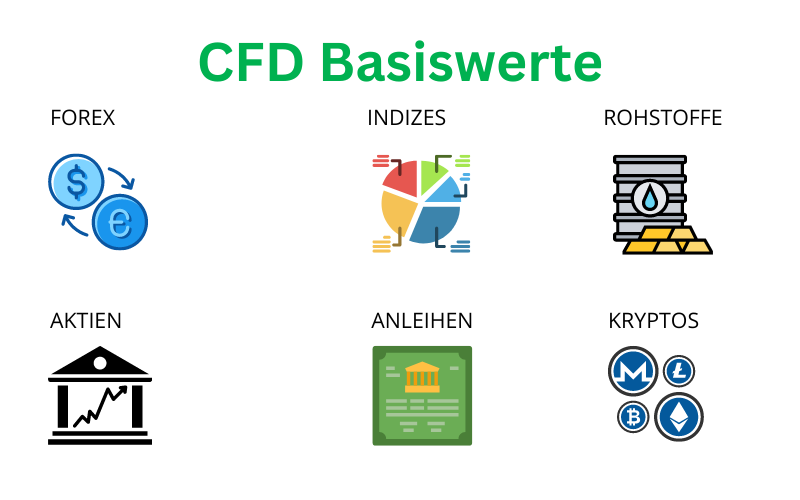
A take-profit locks in gains when your target is reached, preventing emotional decision-making. You can trade CFDs on over 17,000 markets with us, including indices, shares, forex, cryptos, commodities and more. You can even trade CFDs out of hours on certain markets, enabling you to make the most out of breaking news and any macroeconomic announcements – both after the market closes and before it opens. In this way, your stops and limits help you to calculate potential profits and losses from your CFD trades. They can also be useful ways to lock in your profits, or to minimise your exposure to risk. The spread is the difference between the bid and ask prices, and varies depending on market conditions.
Traders Pay the Spread
Ensure the broker offers a demo account so you can test their services before committing your investment capital. 50% of retail investor accounts lose money when trading CFDs with this provider. You should consider whether you understand how CFDs work, and whether you can afford to take the high risk of losing your money. PrimeXBT is a global multi-asset broker and crypto asset service provider trusted by traders in more than 150 countries.
CFDs behave similarly to their underlying market
If you trade forward CFDs instead, you don’t have to pay any swap fees as they’re already covered within a wider spread. As the shift toward crypto–TradFi integration accelerates, PrimeXBT is pioneering this convergence by enabling traders to use digital assets as trading capital to access global markets. This unlocks broader opportunities across asset classes and allows for more efficient allocation as volatility shifts between markets. PrimeXBT provides access to more than 350 global markets through a unified trading environment that integrates PXTrader 2.0 and MetaTrader 5. This includes MT5 Pro for more advanced strategies, alongside PXTrader 2.0, which combines CFDs and Crypto Futures within a single account.
Binary options and spreads give you a different way to trade commodities—with limited risk and a lower cost of entry. Most people who use CFDs are short-term traders or day traders, although CFDs can be used in buy-and-hold strategies if you use no leverage. In order to find more success in trading, you need to know how to use technical analysis, including technical trading indicators. By short-selling the same shares as CFDs, you can try and make a profit from the short-term downtrend to offset any loss from your existing portfolio.